Salt vs. Chlorine Pools: Which Is Better in Florida?
Florida's heat changes the salt-vs-chlorine math. We break down cost, maintenance, skin comfort, and what we actually recommend to local homeowners.
The 'salt vs. chlorine' debate is mostly resolved for most Central Florida homeowners: salt wins, but with caveats you should know before dropping $2,000 on a generator.
Salt pools still have chlorine
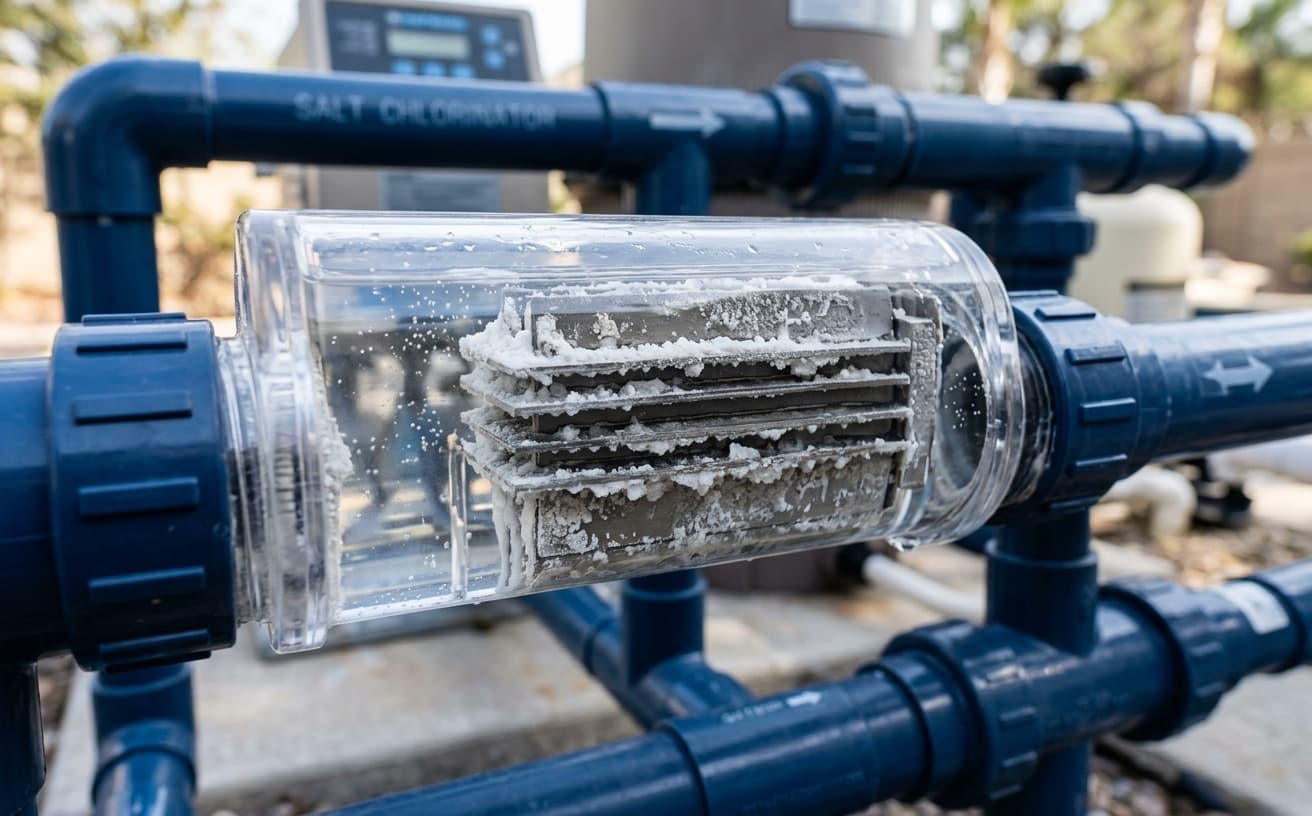
A salt-chlorine generator converts dissolved salt (NaCl) into chlorine through electrolysis. You're not eliminating chlorine — you're generating it on-demand instead of storing it in jugs. Chemistry on a salt pool is, if anything, more sensitive, because you're also watching cell plate health and salt levels.
Cost reality in 2026 Florida
Upfront: Salt generators run $900–$1,800 installed. Salt cells typically last 3–7 years and replace for $400–$900.
Monthly chemicals: Salt pools save roughly $20–$45/mo in chlorine, depending on pool size and bather load.
Payback: Most Central Florida homeowners see salt systems pay for themselves in 3–5 years, assuming weekly service keeps chemistry on-target.
Why we recommend salt to most clients
- Softer water feel (genuine, not marketing)
- No chlorine jug storage
- More stable residuals if the generator is sized correctly
- Easier on eyes, swimsuits, and hair
Why we sometimes don't
- Salt is mildly corrosive to natural stone coping and some heaters — mitigate with sacrificial anodes
- Travertine and older plaster can suffer without good water chemistry
- Cold winter weeks in January reduce generator efficiency (watch chlorine dip)
Bottom line
If you're building or renovating in 2026 in Central Florida, a properly-sized salt system paired with weekly professional service is almost always the right answer. The comfort upgrade alone is usually worth the switch.