Why “Storm Cleanup” Is a Separate Service (And a Green Pool After a Storm Isn't a Normal Cleaning)
A green, debris-choked pool after a Central Florida storm isn't a normal cleaning — it's a chemistry and debris emergency. Here's exactly what a storm does to your water and why storm recovery is billed as its own service across the industry.
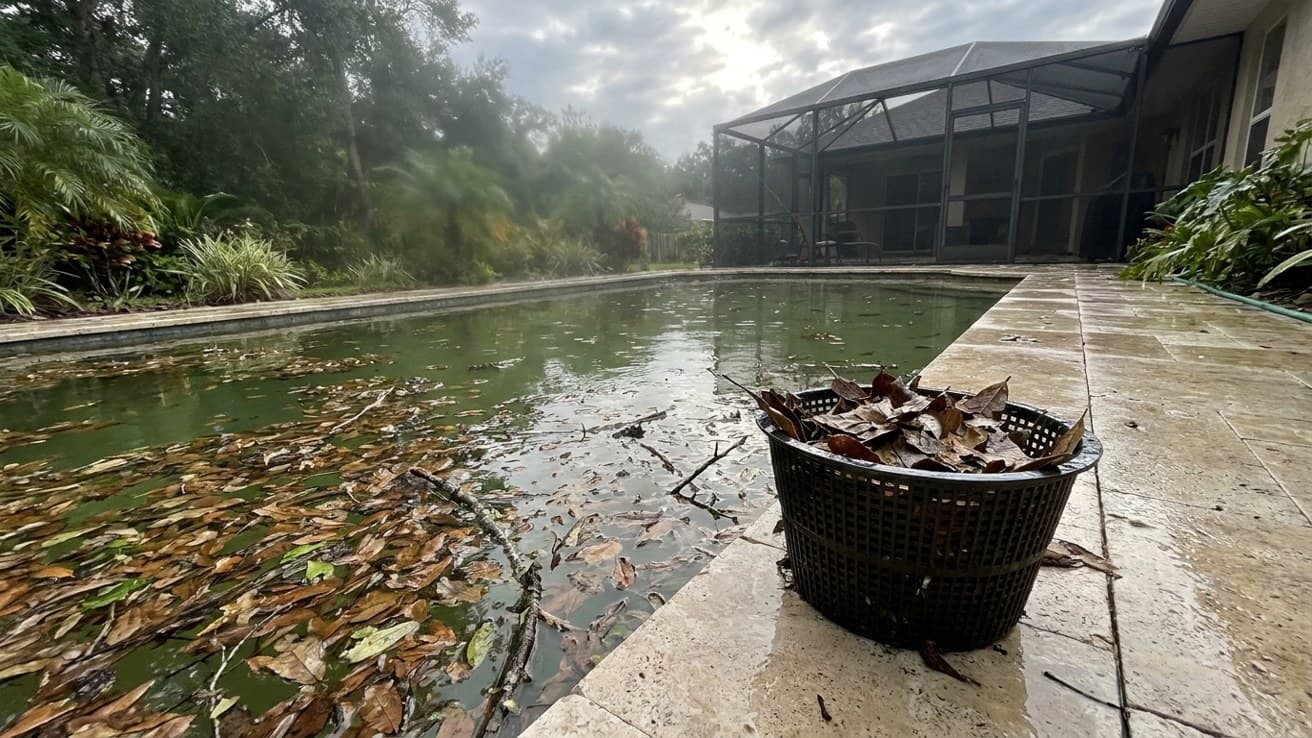
We're going to be honest with you, because that's how we do things at Ducky's Pool Care. Every storm season, the story repeats itself. A system rolls through Central Florida, and within a day or two, pool after pool tells the same tale: skimmers packed with leaves, floors carpeted in debris, and water that's gone from crystal clear to swamp green almost overnight. What's normally routine service turns into hours of heavy recovery work.
Here's the thing every pool owner deserves to understand: after a storm like that, your pool needs “Storm Cleanup,” and that's a different service than your regular monthly maintenance. It's not a fine-print surprise — it's how professional pool service works. Let's walk through exactly why a storm-hit pool is a different animal, and why the whole industry treats its recovery as its own service.
What a storm actually dumps into your pool
A storm doesn't just drop some leaves in the water — it delivers a chemical and biological gut-punch. Storm runoff washes fertilizer, soil, animal waste, and organic debris from your yard, your neighbor's yard, and the whole surrounding landscape straight into your pool. That introduces:
- **Phosphates** — literally algae food, and levels spike dramatically after storms
- **Nitrogen compounds** — which also feed algae and burn through your chlorine
- **Bacteria and pathogens** — from animal waste and decomposing matter
- **Silt and fine particles** — which cloud the water instantly and clog filters fast
On top of that chemistry bomb, the wind drops a physical load of leaves and branches that can clog skimmers within minutes and overwhelm your whole filtration system.
Why a storm turns your pool green so fast
Here's the chain reaction that plays out in backyards after nearly every big storm:
1. The storm diluted your chlorine and dropped organic debris everywhere.
2. That debris started decomposing immediately, eating up whatever chlorine was left.
3. The phosphates and nitrogen fed the algae, which explodes into growth once sanitizer runs low.
4. With no working chlorine and a buffet of nutrients, the pool turned green — often overnight.
And the clock matters. Every hour that organic material sits in your pool accelerates algae growth and chemical consumption. That's exactly why a post-storm pool can't just wait for the next regular visit — the longer it sits, the worse (and more expensive) it gets.
What you can do right after a storm
- **Net out the big debris fast** — leaves left in the water are actively feeding algae and eating chlorine every hour before your tech arrives
- **Empty your skimmer and pump baskets** — a clogged system can't circulate or clean
- **Get the pump running and leave it running** — continuous circulation prevents the still “dead zones” where algae takes hold
- **Check your equipment before powering up if there was lightning** — look for electrical damage at the pad first
That buys time. But clearing a green, debris-choked pool back to swim-ready takes more than a skim and a chlorine tab — it takes extra labor, extra chemicals, and often multiple visits.
Why storm cleanup is billed separately — it's the industry standard
This is the part we want to be fully transparent about, because it's not a “Ducky's thing” — it's how professional pool service works everywhere.
Your monthly maintenance fee covers routine service: skimming, brushing, basket-emptying, testing, balancing, and an equipment check on a normal pool. Storm recovery falls outside that scope, and reputable companies across the country spell this out in their service agreements. Excessive cleanup from storms, vandalism, or heavy landscape debris is routinely listed among the expenses not included in the regular monthly rate, with any vacuum-to-waste or recovery work quoted separately and performed only with the client's approval.
Industry guidance for service companies says the same thing from the business side: weekly service has a defined scope, and return trips for algae, storms, and heavy debris are considered extra work outside the recurring plan — because the cause is outside routine maintenance. A green-pool recovery, which is often exactly what a storm causes, is universally treated as a separate one-time job, not part of the monthly rate.
In short: paying your monthly fee doesn't mean an unlimited amount of labor and chemicals — and when a storm triples the work and doubles the chemical demand at your pool, that recovery is billed as its own service.
Why this is actually good for you
We know “extra charge” is never fun to hear. But here's the honest math: routine maintenance is the cheap insurance that prevents the expensive recovery. A weekly visit costs far less than a green-pool rescue, and staying on a plan is what keeps small problems from becoming big ones.
And as a Ducky's maintenance client, you get something that pays off the week it matters most — priority in storm season. When the weather hits and everyone's pool needs help at once, our regular clients jump the queue. That fast response is often the difference between a quick storm cleanup and a full green-to-clean recovery.
The bottom line
A storm doesn't just give your pool a bad day — it gives it a chemistry and debris emergency. Clearing that up is real, above-and-beyond work, and treating it as its own “Storm Cleanup” service is how we keep our routine pricing fair for everyone and get your water back to beautiful, fast.
Storm hit your pool? Don't let it sit and turn green. Message Ducky's Pool Care to schedule a Storm Cleanup — and ask about the maintenance plans that put you first when the next storm rolls through.